in the past few years, there have been many changes regarding streaming platforms. from account sharing to pricing, these changes have had a huge impact on users and now many are staying away from these platforms. for a while, most people thought that big tech companies had finally figured out how to put an end to piracy. but, as with most big tech companies, they messed it up.
disclaimer
this post won’t tell you how to download anything, how to set up any type of illegal download stack, or anything like that. this post is about why people feel pushed toward illegal means of consumption. it’s about industry greed, capitalism, a misunderstanding of what piracy can be, and the concept of owning media.
the paywall of entertainment
if we go back in time a few decades, most entertainment was shut behind a paywall. for cinema or theater it was buying a ticket, for music it was buying a vinyl, a tape, or a CD. the music industry quickly adapted and used new technologies of the early 2000s. up until that point, if you wanted free music, you had to copy a vinyl or a tape onto another tape, though the quality degraded with each generation of tape. or you could also make vinyl bootlegs: indie pressings of live concerts, radio shows, or unreleased studio sessions. these underground presses produced bootleg versions of albums from the ‘60s to the ‘80s. those vinyls were sold at indie shops under the counter at prices much lower than official presses. the problem with that type of support is that you don’t have unlimited space: a tape is around 30-45 minutes per side, and a vinyl is around 18-22 minutes per side. but then came a website that you may have heard of: Napster.
2 years before the iPod’s release, Napster, a site that allowed users to download free .mp3 files, started to gain a lot of traction on the internet. this was a peer-to-peer sharing service, meaning that the .mp3s were stored on your device, not on Napster’s servers. when this website came out, all you could do was burn these .mp3s onto a CD, but that was enough to start lots of lawsuits.
In 2000, in the A&M Records v. Napster case, multiple recording companies sued Napster on the grounds of copyright infringement under the US Digital Millennium Copyright Act. In April of that same year, a demo of Metallica became accessible on Napster before the official release, leading to another lawsuit.
in this flow of constant lawsuits came the iPod with its famous slogan, “1,000 songs in your pocket”, which revolutionized how we could store and listen to music. for the original version of the iPod, it came with 5GB of storage, which meant more than 80 tapes or 60 vinyls. this, combined with the 2001 peak of unique Napster users, led to Napster being forced to stop doing what they were originally doing. in 2002, Napster filed for bankruptcy and reached settlement agreements of around $26 million. even after closing, Napster had a huge impact on music piracy that still resonates to this day.
the post-Napster world
like any other website of this kind, when the big industry titan dies, new sites try to take its place. when Napster died, Limewire or Soulseek came to life, bringing back what Napster was doing. around the same time, torrents were becoming popular as well thanks to BitTorrent and its unique way of breaking large files into pieces for decentralized peer-to-peer distribution. this way of sharing files, through peers and seeders, was so much more efficient than direct downloads that it became the dominant force in large file distribution.
thanks to this way of sharing files, people were able to download anything across every entertainment domain. whether it was a movie, a game, a software, whatever, chances are that what you are looking for is accessible through a torrenting hub like OpenBitTorrent or The Pirate Bay.
during the next decade, piracy was easily winning even when there were anti-piracy advertising campaigns everywhere. in August 2010, Limewire reached 9.8 million unique visitors in a month. piracy was huge.
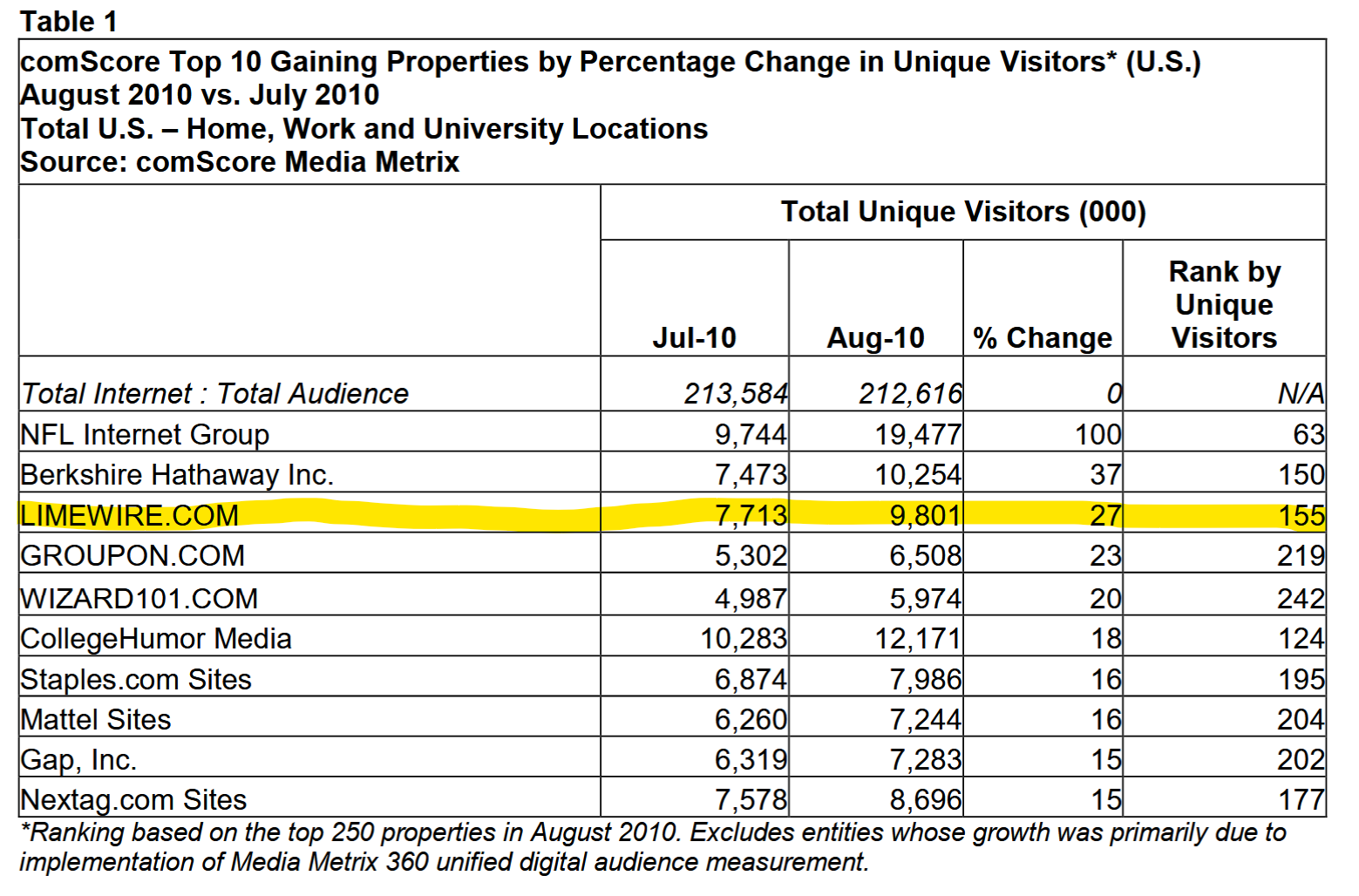
big tech and media companies had spent years trying to figure out a solution to put an end to this ever-growing issue. in the early 2010s, they finally made this trend slow down.
just a few bucks a month
in the early 2010s, people wanted to be able to watch movies or TV shows with their computers. even if piracy was a big thing, you still had the risk of downloading viruses or any kind of threat. of course, some copyrighted content could be accessible through YouTube or other streaming services, but it was very limited and, for most shows, it was incomplete or in poor quality.
with all those problems, R. Hastings thought about a solution: giving people a way to legally stream all their TV shows, movies, etc. by renting them for a fixed amount of time and money. Netflix, a company that was delivering DVDs by mail, created a bundle to have DVD by mail and streaming. by 2010, they created the first streaming subscription plan at $7.99 per month.
this idea completely changed how we consumed entertainment. companies realized that convenience was much more important to consumers than experience. not having to download anything, being able to just click on the movie you want to watch and then chill, was what consumers wanted. so, lots of companies started doing that: Hulu, Amazon, HBO, Disney. but it’s not only the movie industry that got shattered into pieces, the music industry changed as well with Spotify and Apple Music. software companies started following the subscription model instead of a one-time payment because it meant making more and more money.
as consumers, we had no other choice but to conform to this subscription business model unless we wanted to pirate. at the time, this kind of model was good. for a few bucks, you could have access to so much more content than you ever could have before. you could share your account with your friends, split the bill, it was even cheaper!
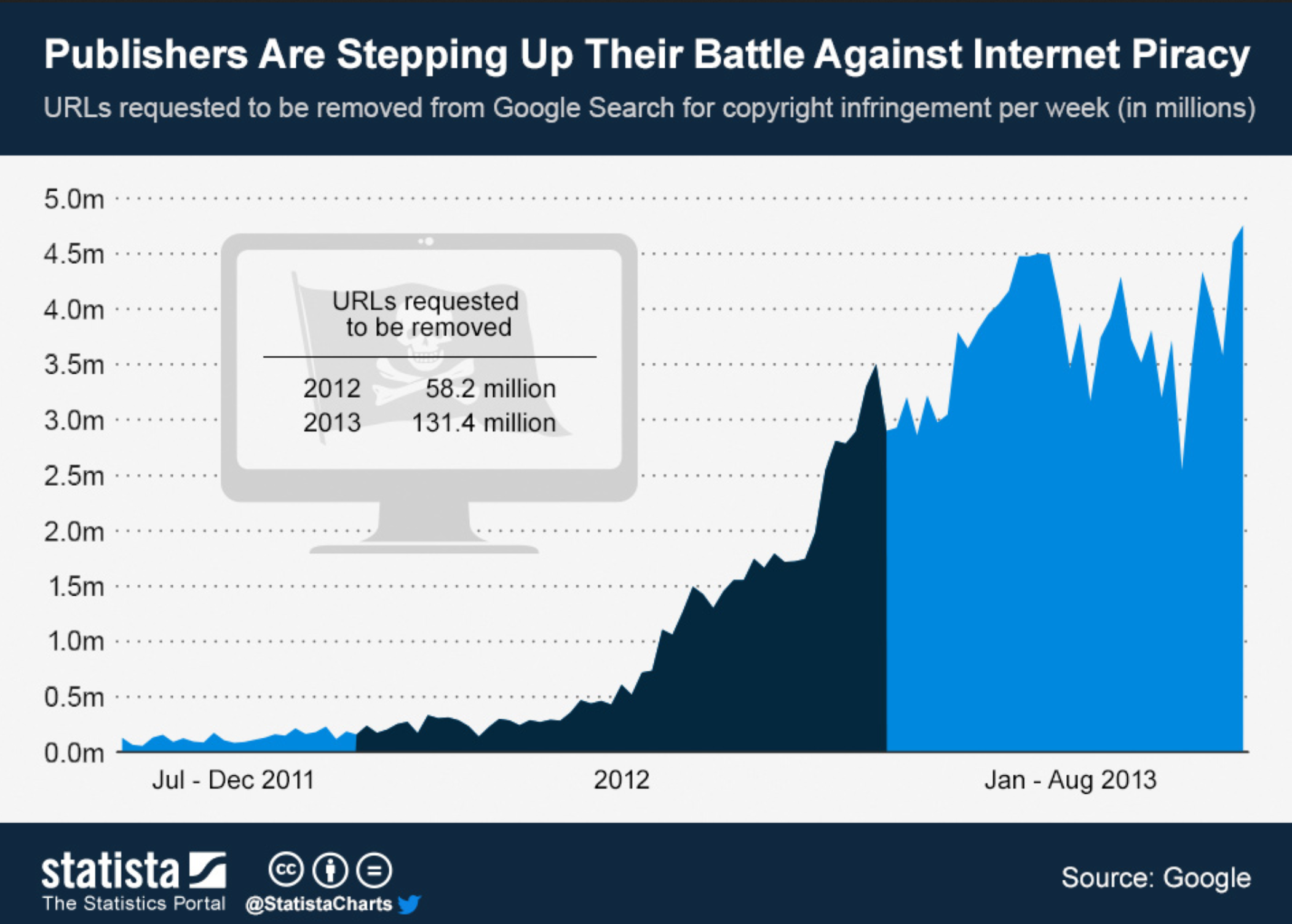
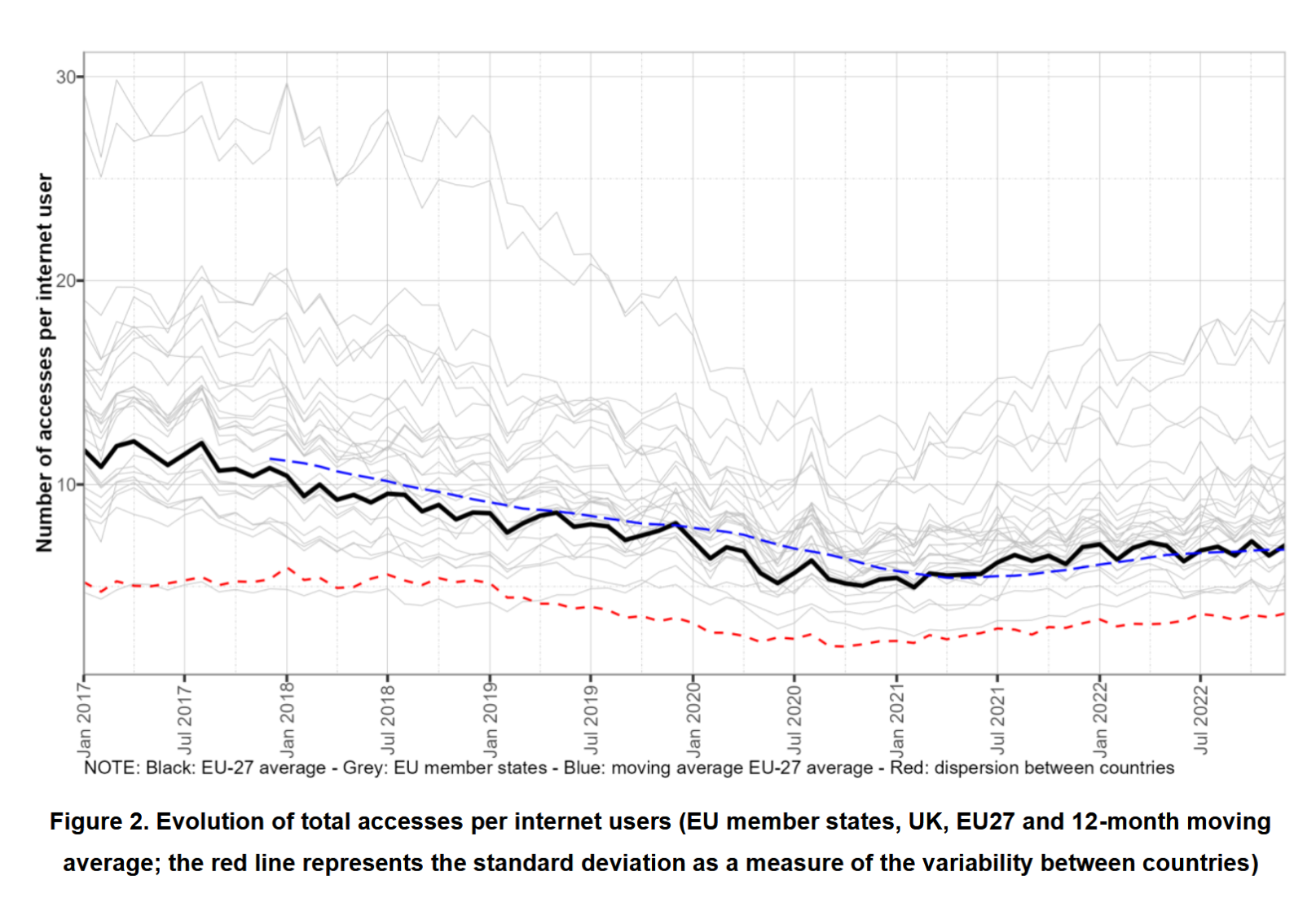
at the time, big tech companies seemed to be winning against piracy as shown in the graph above. the amount of URLs requested to be removed due to copyright infringement had never been this high. during the 2010s, piracy was slowly but steadily going down. a report from the European Union Intellectual Property Office shows that piracy of all kinds in the EU has been crashing over the last 10 years.
the enshittification of the Internet
but then something shifted. companies wanted more and more money. they kept pushing aggressive monetization and we didn’t do anything about it. this phenomenon is called “enshittification“. to explain simply, let’s take Netflix as an example.
first, the platform was built around the user. everything was attractive. it was cheap, the library was full of good movies, good shows, original content, etc. everything was made to draw in as many people as possible. then, once they considered they’d had a big enough audience, they decided that it was time to make money. the audience is leveraged to reshape the platform around advertisers and business clients, not the original clients. this leads to a degradation in the quality of content, but because of FOMO and the accessibility of things on the platform, people are stuck in a system that they depend on.
for example, Netflix removed the sharing account feature that they were advertising before, they canceled shows that were loved by communities, they remove movies and shows from their platforms every month, making it impossible to legally stream those movies/shows, they up subscription prices and add new tiers so you have to pay more for lower video quality and still have ads.
and this is only about Netflix, the same could be said about YouTube, Twitch, Instagram, Twitter, Amazon Prime, HBO, Spotify, etc. it doesn’t feel like having a subscription to any platform is a good deal anymore. whether it be for the artists or the consumers. it feels like a big scam organized by big tech companies to get even more money out of everyone.
but this isn’t even the worst part. when you were buying a CD, a vinyl, a DVD, whatever, you were the owner of the media you just bought. now, with the subscription model, when you pay to watch a movie, read a book, play a game, or listen to music, you don’t actually own anything you’re buying. the companies are the ones that have the rights to give you access to those things. for example, there’s this section in Amazon‘s TOS that applies to both Amazon Prime and Kindle content: “Purchased Digital Content will generally continue to be available to you for download or streaming from the Service, as applicable, but may become unavailable due to potential content provider licensing restrictions or for other reasons, and Amazon will not be liable to you if Purchased Digital Content becomes unavailable for further download or streaming.“ basically, you’re not owning anything. if Amazon loses the right, you lose your purchase.
is it even piracy then?
“if buying isn’t owning, then pirating isn’t stealing“ is a sentence that became very popular in the piracy community because of the new way of consumption that was forced upon us. this sentence is actually a good question. if no one is owning anything, is it even stealing? because of the subscription-based model, we can’t really own anything anymore, money can’t buy ownership anymore, so can we even steal by downloading something for free?
this way of thinking reached a new high recently. in 2024, according to a survey led by Cordcutting, “1 in 3 American adults have pirated shows or movies in the past year“. according to the same survey, people are pirating 11% more than before. according to another survey from YouGov for Variety Intelligence, the main reason why people are pirating content is because the cost of the said content is too high.
but whether it is stealing or not, is it ethical to pirate media?
in an era where companies can strip away any piece of media from you because they say it’s unprofitable or irrelevant, there’s a moral argument to piracy being a good thing for accessibility and media preservation.
for example, The Completionist bought every single game on the Wii U and the 3DS before the Nintendo eShop closed its doors. this was the only legal way to not lose access to thousands of games. since this video, most of these games are lost, and we have no legal way to buy and play them. the only solution is piracy.
piracy can also be a way to access something that would be otherwise inaccessible where you live. whether it’s censorship like in China, inflation making it impossible to buy a game like what happened in Indonesia with Cyberpunk 2077, or licensing and distribution limitations in some regions making it impossible to watch a movie legally. piracy is the only solution to those problems.
even for media preservation, piracy might be the only way of doing it. i’m not going to go into too much detail, but tape, CD, vinyls, and any other type of media support degrade over time. the best one available is films, which can last around 70 years, but they need to be stored in very precise conditions. the key to preservation is parity. if the studio where Arctic Monkeys’ AM original hard drive is stored burned down right now, i, and millions of other people, have a copy of the album on vinyl in our homes. in this situation, we might lose the original, but the album will continue to exist anyway. for a company or a non-profit organization, this is impossible to handle alone, piracy kind of fixes this problem.
some non-profit organizations are trying to preserve media and make them accessible for free on the internet, like The Internet Archive, for example. leaving an organization doing this alone will have some impacts. for example, in October 2024, they were DDoS’d so hard that the website was offline for a full month. it was unsure if we were ever going to be able to access the largest archive ever created again. some things on the IA servers are only available there, and if something ever happens on their end, it could be lost forever.
piracy could help preserve media, but to some extent. some media are even worse than others when it comes to preservation. video games, for example, are horrible. not only do you need to preserve the game itself, but you need to have a server to connect to. when Ubisoft shut down The Crew, even pirating the game wasn’t enough to preserve the media.
piracy can help preserve some media, but not everything. people are mostly only pirating what they have an interest in. so some organizations, like the Internet Archive, are doing great work.
to answer the question, yes, piracy can be morally correct when we’re talking about media preservation and accessibility because we know that companies like Netflix and many others don’t have anything else than profit in mind.
how could we lessen piracy then?
some people state that piracy is a way of accessing media before buying it and/or supporting the artists, and that piracy can have some positive impacts like Napster had on Kid A. when Gabe Newell, the owner of Valve and Steam, talked about piracy during an interview, he said that they “don’t really worry about piracy”. he says that “there’s a misconception about what piracy is”. he insists on the fact that gamers are willing to buy games, they have a $2000 computer, they have a $50/month internet subscription, they have the money. he then says that “piracy is a result of bad service on the part of game companies”.
if companies want to stop people from pirating their movies, software, games, etc. they need to go back to caring about their customers, not the investors. they need to care about the people that helped build their business from the beginning, they need to preserve media, have accessible prices all around the world, and have less restrictive policies.
until companies start giving consumers what they want, piracy will continue to feel like the only solution for a growing number of people.